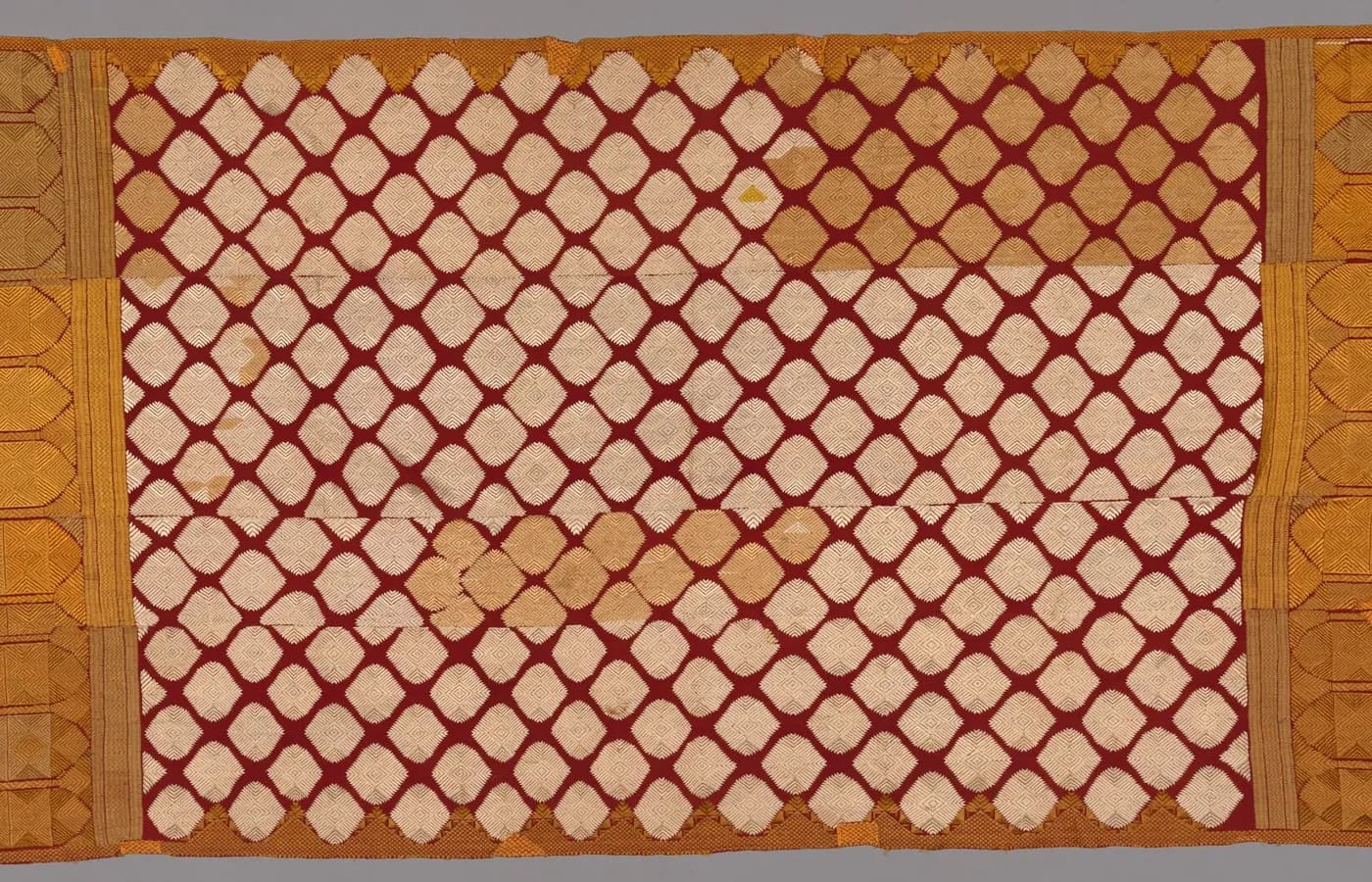
Phulkari literally joins phul, flower, with kari, work. The name describes an embroidery tradition associated with Punjab in which untwisted silk floss is worked from the reverse of handwoven cotton cloth, often with the darning stitch.
Historic pieces were made primarily by women for use within families. They marked weddings, births and other rites of passage. A wari da bagh could form part of a bride’s trousseau; chope shawls were connected with wedding ceremonies.
When the ground disappears
Phulkari is a broad term, but bagh—meaning garden—describes work so densely embroidered that the base cloth is almost hidden. Geometric surfaces shift as silk catches the light, making a still textile feel animated.
The motifs also preserve a social landscape. Alongside flowers and diamonds, makers stitched animals, jewellery, household objects and scenes drawn from daily life. The cloth could become memory, gift and public identity at once.
To treat phulkari as surface decoration alone is to miss the knowledge carried in its materials, motifs and making.
Revival and responsibility
Partition in 1947 divided Punjab and displaced millions, disrupting communities in which textile knowledge circulated. Today phulkari is practised and sold in both Indian and Pakistani Punjab, while designers continue to adapt it for contemporary dress.
That visibility brings a responsibility to distinguish hand embroidery from machine imitation, credit artisans and avoid presenting a centuries-old practice as a newly discovered aesthetic. The most interesting modern work treats inheritance as collaboration, not raw material.
Editorial note: Historical features distinguish documented facts from interpretation. Images marked illustrative do not depict the named event.